



Golden paste is a popular way to give dogs turmeric, combining it with oil and black pepper to improve absorption. But how effective is it, and is it the right option for your pet?
🕒 4 min read
What is turmeric?
Turmeric, often referred to as the “golden spice”, comes from the root of the plant Curcuma longa. It has been used for centuries in traditional practices such as Ayurvedic medicine, where it has been applied to a wide range of conditions.
In its powdered form, turmeric is widely used in cooking as both a spice and a natural colouring agent. More recently, it has become increasingly popular as a supplement for dogs.
What are the potential benefits for dogs?
Research suggests that turmeric contains compounds with anti-inflammatory and antioxidant properties. Inflammation is linked to a number of long-term health conditions, including allergies, joint issues, digestive concerns and weight-related conditions.
Because of this, turmeric is often used as part of a broader approach to supporting general health and wellbeing.
However, while laboratory studies have shown promising effects, these findings don’t always translate directly into clear improvements in real-world use. Research is ongoing, and one of the key challenges appears to be how well turmeric is absorbed by the body.
Why absorption matters
One of the main limitations of turmeric is its low bioavailability. This refers to how much of a substance is actually absorbed and used by the body.
Turmeric is known to be poorly absorbed, quickly broken down and rapidly removed from the body. This means that only a small proportion of what is consumed may have a meaningful effect.
Studies suggest that combining turmeric with piperine (found in black pepper) or a source of fat can improve its absorption. This is the principle behind golden paste.
What is golden paste?
Golden paste is a mixture of turmeric, water, oil and black pepper, combined to form a paste that can be added to your dog’s food.
The inclusion of oil and black pepper is designed to improve the absorption of turmeric’s active compounds, making it more effective than turmeric alone.
How to make golden paste
Golden paste can be made at home using a few simple ingredients. However, it’s worth noting that turmeric can stain surfaces and fabrics easily, so preparation should be done with care.
- Add 50–60g of turmeric to 250–300ml of water
- Heat gently for 8–10 minutes, stirring to form a paste
- Remove from heat and add 70ml of coconut oil and two teaspoons of ground black pepper
- Allow to cool before transferring to a container
- Store in the fridge and use within two weeks
Golden paste vs supplements
If you’re considering turmeric for your dog, it’s worth thinking about the form you choose.
Golden paste can be effective in theory, but it isn’t always practical. Its strong colour can make it difficult to disguise in food, and the taste of black pepper may not be well accepted by all dogs.
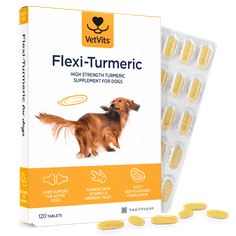
Some dogs may prefer a more convenient option, such as a formulated supplement like Flexi-Turmeric for Dogs, which is designed to be easy to use and more palatable.
If you do choose to use golden paste, it’s best to introduce it gradually over 7–10 days to help your dog adjust.
Is turmeric safe for dogs?
Turmeric is generally considered safe when used appropriately, but getting the right amount is important. Too little may not provide noticeable benefits, while too much can cause digestive upset.
Golden paste also has a limited shelf life and needs to be stored correctly. Feeding spoiled or poorly stored food can lead to digestive issues.
Final thoughts
Turmeric can be a useful addition to your dog’s routine, particularly when used as part of a broader approach to supporting health. However, it’s not a one-size-fits-all solution.
If your dog has an existing health condition or is taking medication, it’s always best to speak to your vet before introducing new supplements. This helps ensure you choose the safest and most appropriate option for your pet.